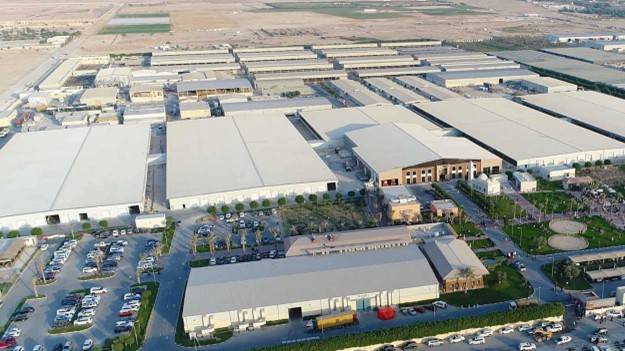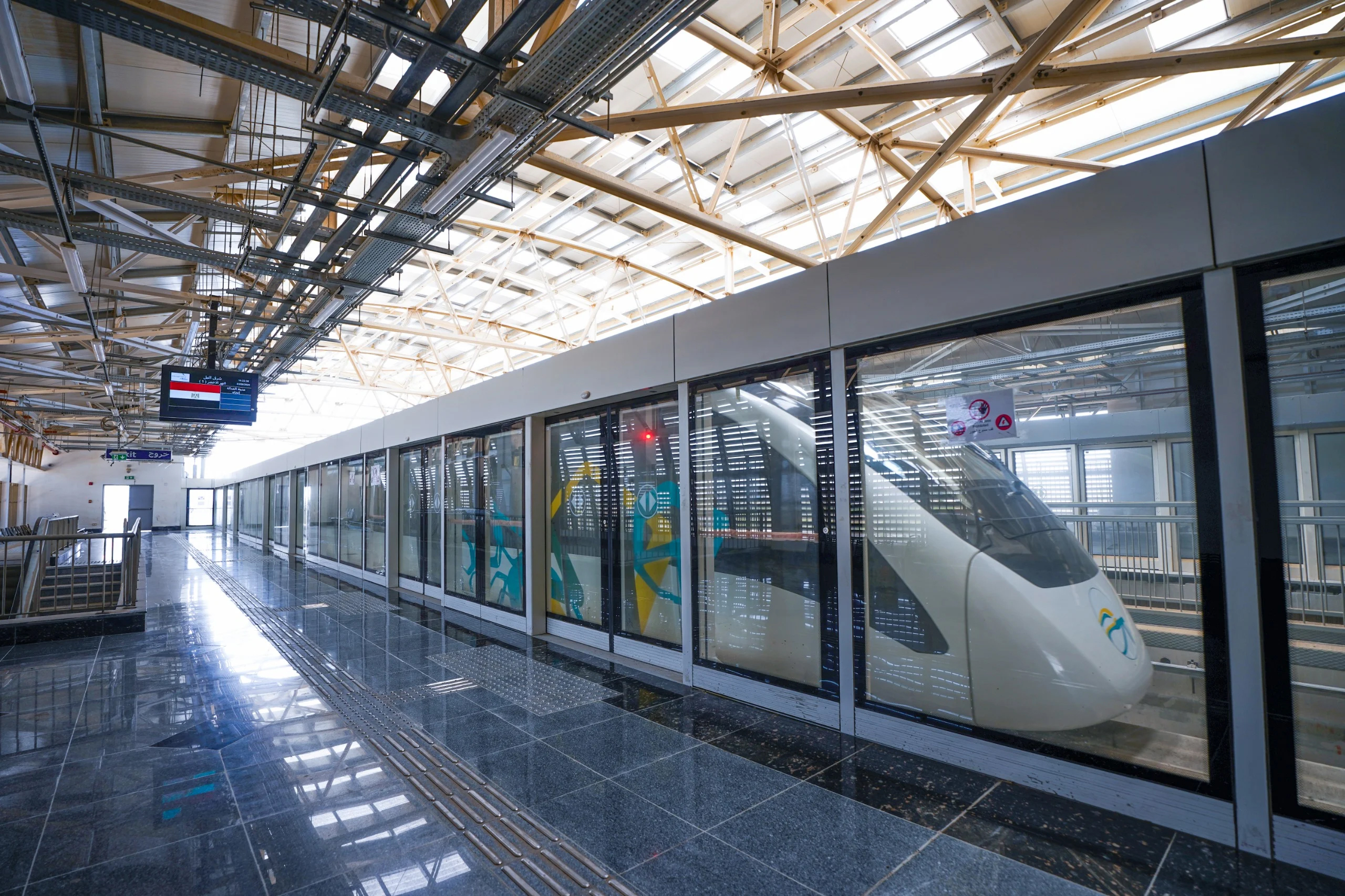
Cairo Monorail is a landmark national transportation project designed to enhance mobility across Greater Cairo through a dual-line rapid transit system. Owned by the National Authority for Tunnels (NAT) and operated by Alstom, the project represents one of the most significant infrastructure investments in the region. Mircom’s fire alarm solutions were selected for their proven reliability, seamless integration capabilities and ability to scale consistently across a phased development program.
Project Background & Scope
The Cairo Monorail is being executed in two phases. The East Nile phase comprises 22 stations, each equipped with a FleX-Net fire alarm panel, OpenGN graphical monitoring Fire Alarm software, and BACnet integration with CCTV, BMS, and Rail SCADA systems. A centralized OpenGN workstation at the depot building provides full network supervision across all stations and depot facilities. This phase is fully completed and operational. The West Nile phase extends the network with 11 additional stations and 4 depot panels, following the same proven design architecture established in the first phase.
Challenge
Delivering a fire and life safety solution across a large-scale, distributed transit network presented four critical challenges:
• Distributed Architecture: Managing multiple stand-alone panels across a wide network while maintaining system cohesion and localized control
• System Integration: Ensuring seamless interoperability between fire alarm systems and critical rail infrastructure, CCTV, BMS, and Rail SCADA system via BACnet
• Centralized Monitoring: Providing a unified OpenGN platform capable of supervising all stations and depot facilities simultaneously in real time
• Scalability: Maintaining a consistent design that expands efficiently across phases without disruption to live operational systems
The mircom solution
Mircom provided a fully integrated and scalable fire and life safety platform combining station-level control with centralized network oversight. Each station was equipped with a FleX-Net panel integrated to PLC on the Ethernet network via BACnet, ensuring localized control and high reliability at every point across the network. OpenGN workstations at each station provided real-time graphical monitoring and intuitive local control for station operators.
At the network level, a central OpenGN workstation at the depot monitors all station panels and depot facilities simultaneously, enabling rapid, coordinated response to any life safety event across the entire network. Native BACnet connectivity ensured seamless integration with CCTV, BMS, and Rail SCADA systems, delivering unified situational awareness without the need for external protocol converters.
Benefits and Value Added
Mircom’s solution delivers comprehensive passenger and infrastructure protection across the full monorail network. The combination of local station control and centralized depot monitoring achieves an optimal balance between operational autonomy and network-wide visibility. Native BACnet integration eliminates protocol converter complexity, reducing installation time and long-term maintenance overhead. The consistent architecture across both East and West Nile phases enables seamless network expansion, protecting the client’s investment and simplifying operational management as the system grows.
Conclusion
The Cairo Monorail project demonstrates Mircom’s ability to deliver advanced, integrated fire and life safety solutions for large-scale transportation infrastructure. With stand-alone station systems, centralized monitoring, and seamless integration with critical rail platforms, Mircom has established a robust, future-ready safety network, reinforcing its position as a trusted partner for mission-critical infrastructure projects across the globe.
For more information about Mircom’s fire and life safety solutions for transportation and infrastructure applications, speak to a solutions expert today.